
AGRO_RECOMMENDATION
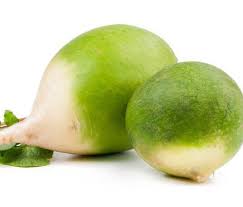
USEFUL PROPERTIES OF RADISH
Radish is one of the vegetables useful for human health. Its root is rich in minerals. According to its composition, radish is very useful in the end of the winter season and the beginning of spring, in the days when our people call it "the marrow is cut off", to replace the lack of vitamins and mineral salts in the body. It has powerful anti-microbial properties.
Radish varieties "Andijan-9", "Margilan local", "Sadiq", "Kuz Hadyasi" and foreign varieties "Daikon" or Japanese radish are recommended for planting in our country. Radish seeds to be planted must be clean, highly fertile, disease-free, medium-sized, whole, and undamaged.
Before planting radish, the field is cleared of previous crop residues and weeds. 200 kg of rotted manure is applied to 1 hectare of land. The soil is softened by mixing it with rotted manure and mineral fertilizers at a depth of 20-25 cm. Large pieces are crushed, leveled well, and irrigation egates are removed.
Radish is mainly planted in summer.
in the areas located in the central region on August 1-15,
in the northern regions, July 25-August 10,
in the southern regions, it is possible to sow in a row and in a row from August 20 to September 20.
In both ways, the distance between the edges is 70 cm. The seed is sown by hand. 50-60 g of radish seeds are used per 1 hectare of land and planted at a depth of 1.5 cm. The soil is raked with a harrow.
After sprouting, it is necessary to quickly transplant and unify. The first single seed is transferred as soon as it germinates from the ground, and the second one when it produces 2-3 leaves. In this case, the distance between the bushes is 10-12 cm. It is necessary to loosen the rows around the plant with a hoe at a depth of 15-16 cm, give mineral food and water. During the growing season, after every two to three waterings, the rows are softened. The radish field is fertilized after weeding and weeding. In this case, ammonium sulfate - 2 kg, ammophos - 1.5 kg, potassium chloride - 0.5 kg/ha are applied to 1 square meter of land.
Fighting diseases and pests
Radishes are severely damaged by pests - aphids, aphids, aphids, diseases - powdery mildew and white rot. Mospilan 20% 25-30 g per 10 hectares of crop area is used against pests.
Although radishes are hardy, the tubers should be harvested before the ground freezes. The quality of radish fruit with an average size of 10-15 cm is high. However, the crop can be harvested when the tubers are 5–10 cm in diameter.
Our social media pages!
WEB|Telegram| Instagram | Facebook |Youtube