
The anomalous hot weather observed these days increases the risk of water shortage, increased transpiration, reduced photosynthesis, burning of leaves and fruits, and death of young plants. This situation poses a serious threat, especially for rare varieties, local forms, wild relatives and vegetatively propagated genotypes stored in field genebanks.
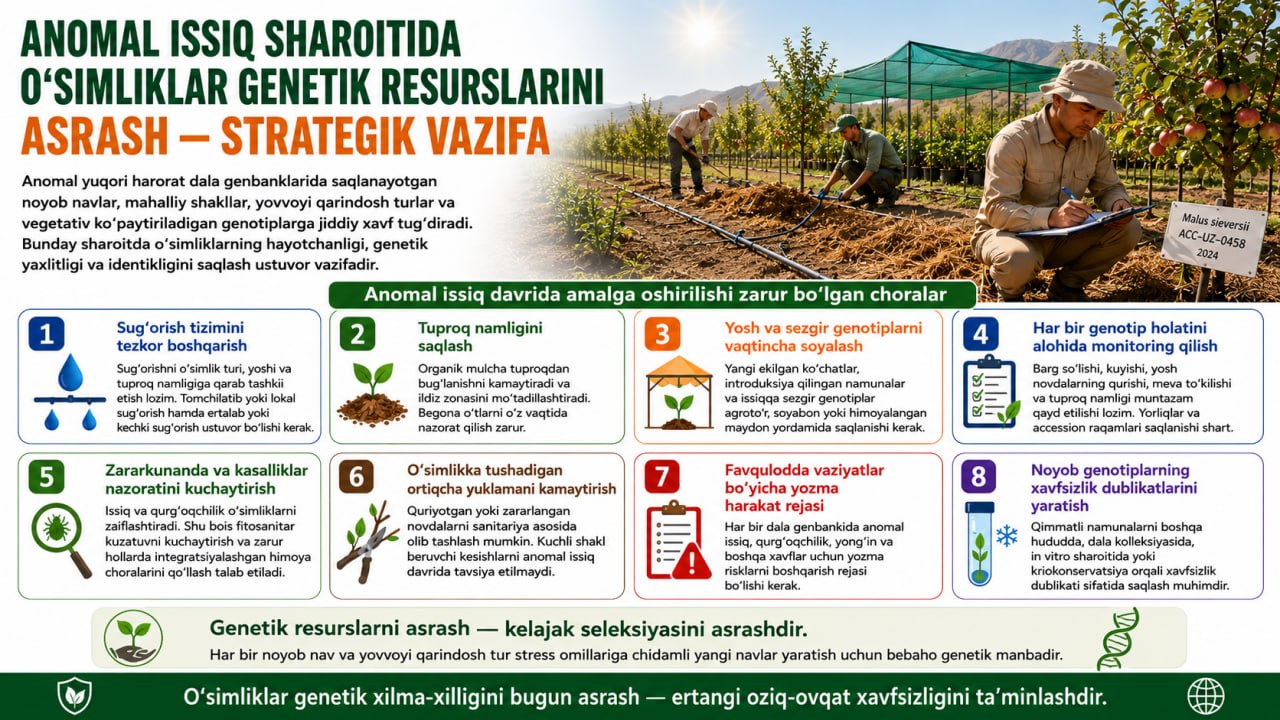
According to the standards of the FAO gene bank, the following measures are prioritized during anomalous heat:
organization of watering in the morning or evening, drip or local method;
maintaining soil moisture by mulching and controlling weeds;
temporary shading of young, introduced and heat-sensitive genotypes;
separate monitoring of each sample condition, storage of field map and accession numbers;
strengthening phytosanitary control against diseases and pests;
reduce excessive fruit load on weak plants, but avoid sharp cuts;
development of a written action plan for extreme heat and drought;
Creating safety duplicates of valuable genotypes in another region, in vitro or under cryopreservation conditions.
The measures to be taken in the period of abnormal heat are not only to save the plant, but also to protect it viability, genetic integrity and purity of variety serves to provide for future generations.
Each unique genotype is an invaluable resource for future development of new varieties resistant to drought, heat and disease.
Preserving genetic diversity today is ensuring food security tomorrow.