

It_is_interesting
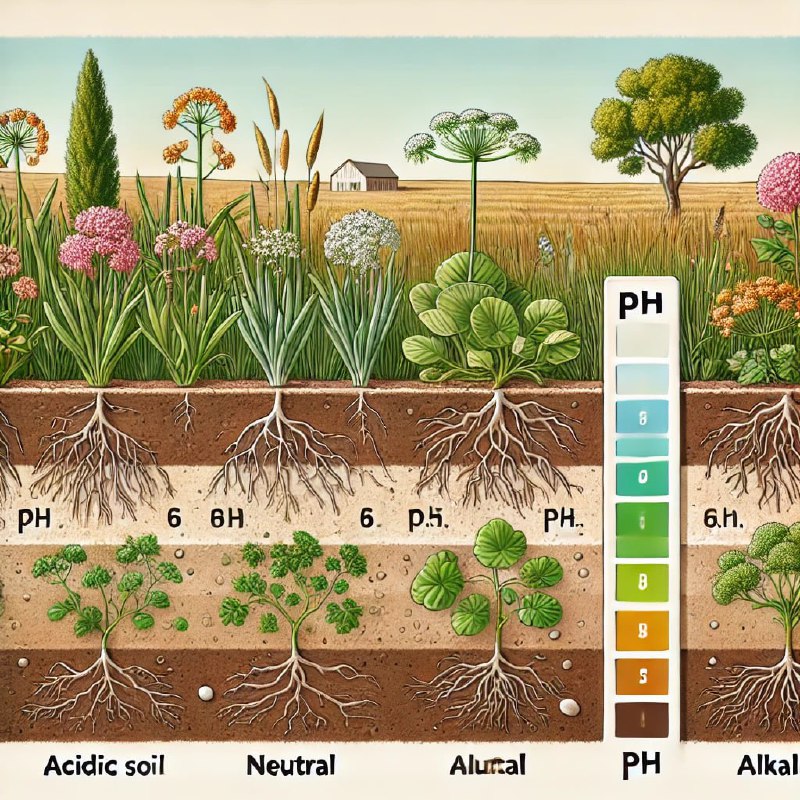
Importance of soil environment (pH) in agriculture
Soil reaction (pH environment) is an indicator of the acidity or alkalinity of the soil, which is measured on a scale from 0 to 14:
pH 7 – neutral;
Below 7 - acidic soil;
7-8 - weak alkaline soil;
Above 8 - strongly alkaline soil.
Soil pH is very important in agriculture because it:
Affects the availability of nutrients for plants;
Determines the activity of microorganisms;
Forms the general condition of the soil.
Most plants grow well in slightly acidic or neutral soils, that is, in the pH range of 6 to 7.5. If the pH level of the soil deviates from this range, it can negatively affect the growth and productivity of plants.
Acidic soil (pH below 6):
It leads to the deficiency of important nutrients such as calcium, magnesium and phosphorus.
It can cause a slowdown in plant growth and a decrease in productivity.
Alkaline soil:
Weakly alkaline soil (pH 7-8): This alkaline soil can be favorable for mostly halophytic (saline-loving) plants, but in such an environment, nutrient absorption is likely to decrease in some crops.
Strong alkaline soil (pH above 8):
It leads to deficiency of trace elements (for example, iron, manganese, zinc).
Causes poor absorption of nutrients for plants.
How to manage the soil (pH) environment?
Lowering the pH environment (making the soil slightly acidic (pH = 6-7)):
Lime (calcium carbonate) is used.
It is recommended to distribute it evenly across the field before planting.
Elemental sulfur or acidic fertilizers (for example, ammonium sulfate) are used. These substances increase the hydrogen ions in the soil and increase acidity.
Regularly monitoring the soil (pH) environment and changing it if necessary will ensure healthy crop growth. Correct pH balance contributes greatly to better absorption of nutrients, activation of microbes and increased productivity.
Subscribe to the official pages of the National Center!
WEB|Telegram| Instagram | Facebook |▶ Youtube