
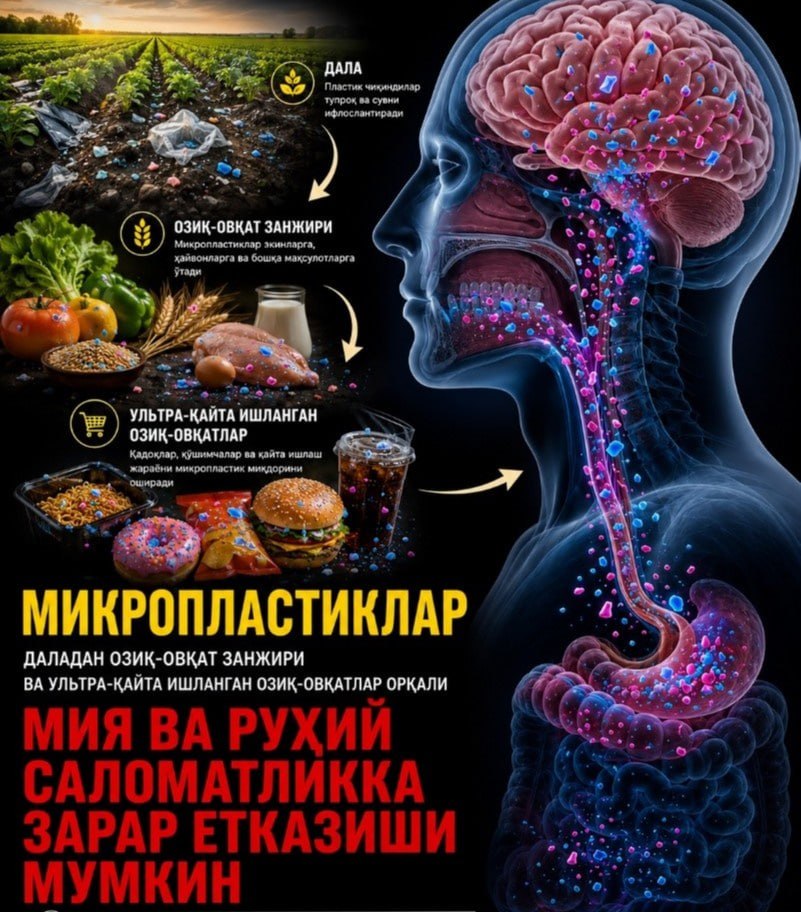
Many farmers have one peace of mind: "I cleaned the field, I put the garbage aside - the field is clean." In fact, plastic left on agricultural land travels through several interconnected pathways, each of which can eventually return to humans.
The first way is soil. Film, tape, and bag fragments left in the field mix with the soil during tillage, burrow into the pit, and break down further over the years. Agricultural soils are becoming one of the important places of accumulation of plastic pollution. Depending on the type, size, and quantity of particles, they can affect soil structure, porosity, air and water movement, and the life of beneficial organisms that support fertility.
The second way is water. Small pieces of plastic can spread from one field to another through ditches, collectors, drainage and irrigation water, and then into rivers, lakes and groundwater. So, a piece of plastic left in your field today is likely to reach the neighboring field tomorrow, and then the entire water system. Here, no farm is completely isolated from others.
The third way, the most worrisome, is the plant and food chain. Experimental studies show that very small particles, especially nanoplastics, can, under certain conditions, enter the plant through the root or leaf and transfer to other tissues. Larger microplastics can indirectly harm plants by affecting soil conditions, water and nutrient uptake. Real-world field evidence is still being collected, but the potential impact on photosynthesis, growth and crop quality alone is reason enough to start taking preventive measures today.
Minister of Agriculture, Academician Ibrahim Abdurahmanovwas taken from the article published in "Yanyi Uzbekiston" newspaper.
You can read the full article through the following link: https://yuz.uz/oz/news/kozga-korinmas-khavf-mikroplastik-va-bizning-dalamiz