

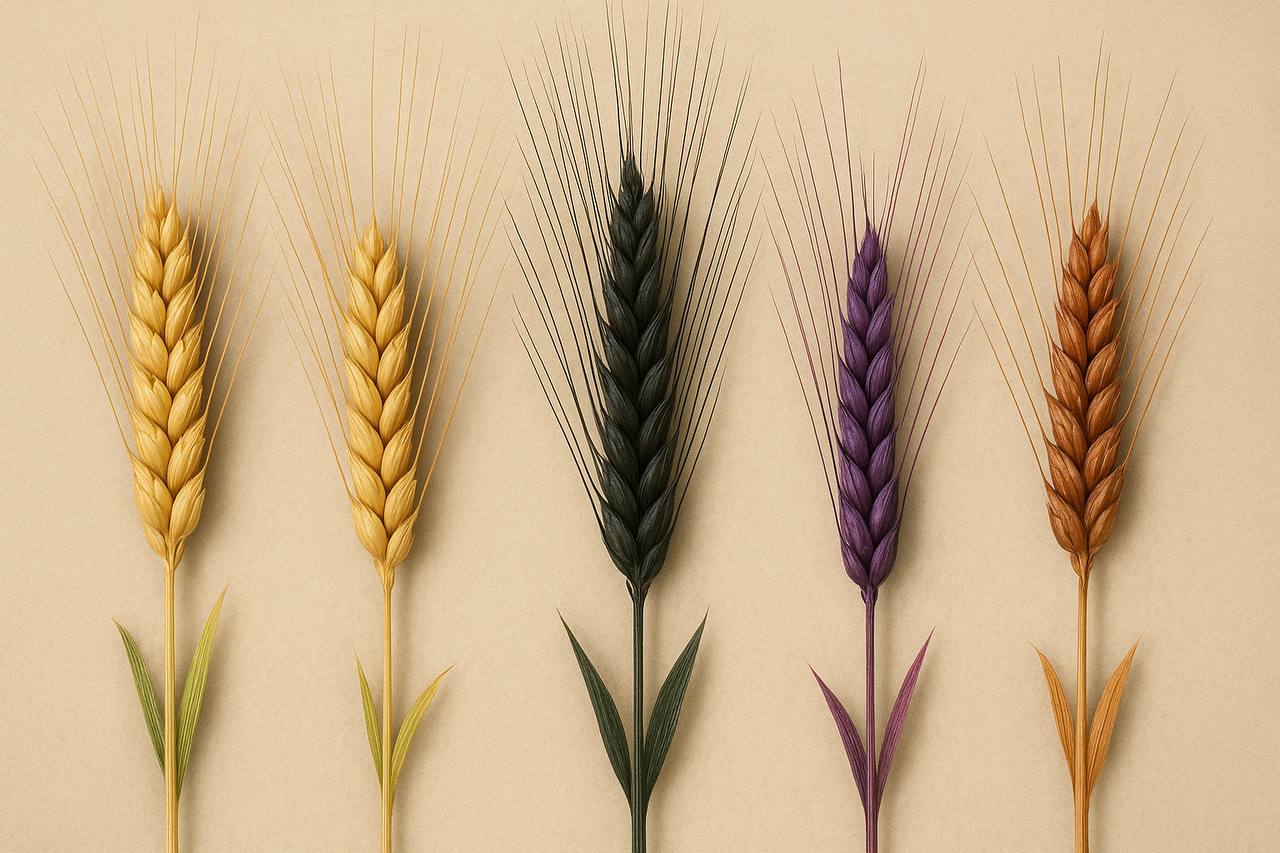
Ancient and rare varieties of wheat are of special importance due to their genetic diversity, climate resistance and nutritional value.
- Emmer wheat (Triticum dicoccum)
was cultivated more than 10,000 years ago. High nutritional value, rich in protein and fiber. Mainly grown in Italy, Middle East and India. - Einkorn wheat (Triticum monococcum)
The oldest cultivated wheat in the world. Low in gluten, rich in nutrients. It yields little, but is valued for its taste and health benefits. - Black Emmer (Black Emmer)
It is distinguished by its black-green grains. Rich in antioxidants. It is grown mainly in East Africa and the Middle East. - Purple Straw Wheat (Purple Straw Wheat)
One of the historic American wheat varieties. The grains and straw are purple. Resistant to cold and diseases. - Red Fife wheat
was popular in Canada in the 19th century. It is distinguished by its unique taste and high-quality flour.
At the same time, wild wheat species such as Triticum urartu and Aegilops speltoides play an important role as the genetic basis of modern cultivars.
Unique wheat varieties play an important role in preserving human food security and agrobiological heritage.