
ISSUES THAT CANNOT BE DELAYED IN GRAIN FARMING WERE DISCUSSED
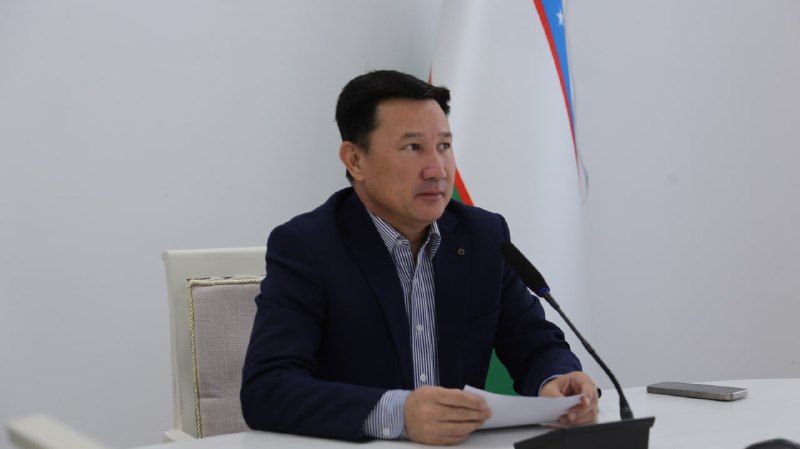
An extended meeting was held today under the chairmanship of Shuhrat Otajonov, director of the National Center.
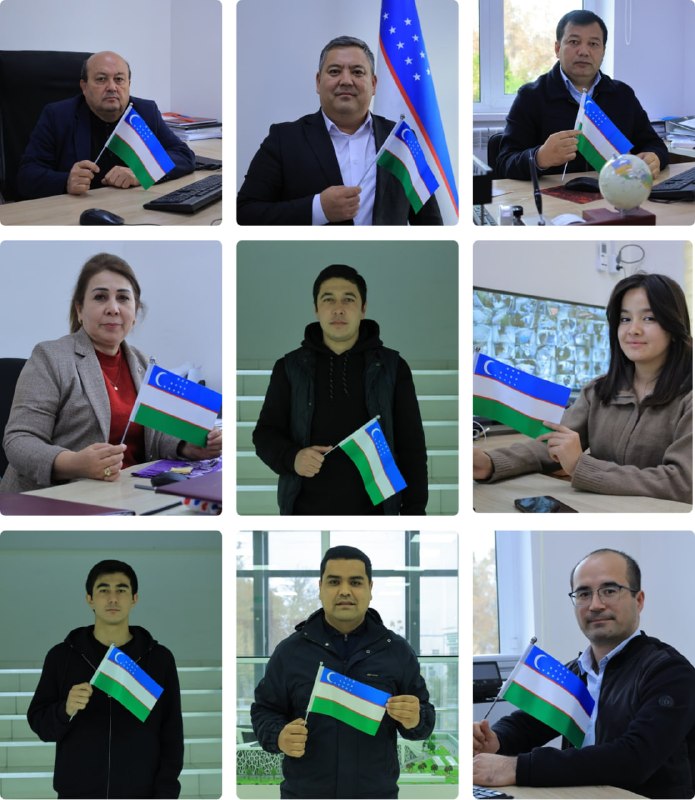
⏺ It was attended by the staff of the management apparatus of the National Center and the heads of scientific-research institutes and AKIS in the system through video conference communication.
The head of the National Center, Shuhrat Otajonov, said that this year, the autumn-winter months in the republic were slightly below the climatic norm (in November 2024, the average daily temperature was +7+9 0C, in December -3-5 0C, and it was during the grain rest period. In January 2025, during the first ten days of January 2025, it was -1-4 cold at night, during the day +6+12, In the 2nd ten-day period (nights +2+4, days +8+16) during the day, he pointed out that he had a significant impact on the growth and development of autumn grain crops, and asked the opinions of scientists as a solution to this situation.
Oybek Amanov, director of the Southern Agricultural Research Institute, who directly participated in the meeting, said: "The warm and dry October and November of 2024 in the southern regions had a positive effect on the growth and development of autumn grain crops. As a result, the seeds of autumn grain crops planted early (September) and at the optimal (October) period, even if not irrigated, also received precipitation. fully germinated and sprouted in the 1st half of November, and in the fields planted in the first half of November, the grasses entered the period of 3-4 leaves and entered the winter. In the fields planted in the late period, the winter wheat is in the 1-2 leaf stage. gave information. Ravshanbek Siddikov, director of the Research Institute of Cereals and Legumes, and Zahid Ziyodullayev, deputy director of the Rice Research Institute, confirmed that a similar situation is observed in all regions of the republic.
Based on the soil-climatic conditions of the regions of the republic, the scientists expressed their opinion that if the weather is warm in January, the lawns in grain fields that have not been fed and watered, and the soil has insufficient moisture, turn yellow due to a lack of nitrogen and moisture, the growth of leaves and stems slows down, and the number of shoots decreases.
Depending on the development of winter wheat cultivation in February, the demand for feeding and watering in the most optimal period and standards of each variety should be carried out, taking into account the soil and climatic conditions.
After that, the director of the National Center, Shuhrat Otajonov, said the following:
Development of recommendations for agrotechnical measures suitable for regions;
Organization of practical seminars in the regions of the republic with the participation of scientists;
Tasks such as promotion of video, infographic and text content of a recommendatory nature through the press and social networks were defined.
Subscribe to the official pages of the National Center!
WEB|Telegram| Instagram | Facebook |▶ Youtube