
Geopolitical risks and the path chosen by Uzbekistan
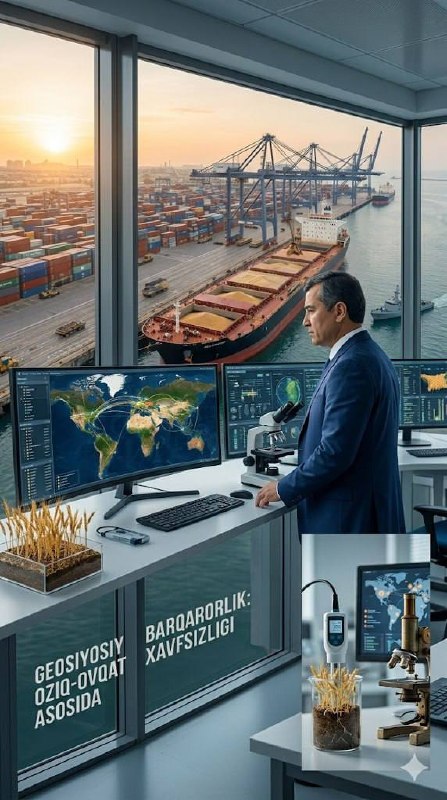
In today's world, food security has become not only an agrarian issue, but also a geopolitical stability issue. Wars, disruptions in trade routes, sudden changes in fuel and fertilizer prices, export restrictions, risks to ports and logistics routes show that the yield of a field in one country can be affected by political events in another continent. In such conditions, the essence of the well-thought-out reforms in agriculture by the head of our state is even more evident. Gradual abandonment of state orders and old administrative systems, giving freedom to farmers and peasants, introducing market mechanisms in grain and cotton, expanding water-saving technologies, increasing transparency in land use, allocating land to farms, developing processing and export infrastructure - all this is not only economic reform. This is a way to strengthen the food independence and internal stability of the country in the period of increasing external threats.
Today's geopolitical situation teaches us one truth: each country should be able to provide the main part of its own table, and at the same time be rationally connected with the world market. This is the way of Uzbekistan: to provide stable domestic market, increase farmers' income, expand exports, protect water and soil, create added value through science and technology. As the President noted, every problem can be turned into an opportunity if we use science, technology and innovation correctly. Today's food policy rests on this very principle: the answer to geopolitical risks is not isolation, but strong domestic production, diversification, science-based agricultural management, digitization, water conservation and people-oriented reforms.
"Table of 2050: Who will feed humanity and how?" published in the newspaper "Yanyi Uzbekistan" by the Minister of Agriculture, Academician Ibrahim Abdurahmanov. from an article titled
Follow the official pages of the National Center.
WEB| Telegram| Instagram | Facebook| Youtube