
Being the first to bring the product to the market brings a good income to the farmer. Cultivation of vegetable crops by the Toksonbosti method offers just such an opportunity.
Below, we bring to your attention the recommendations given by the scientists of the Scientific Research Institute of Vegetables, Potato Crops and Potatoes on the cultivation of beets using the ninety-five method.
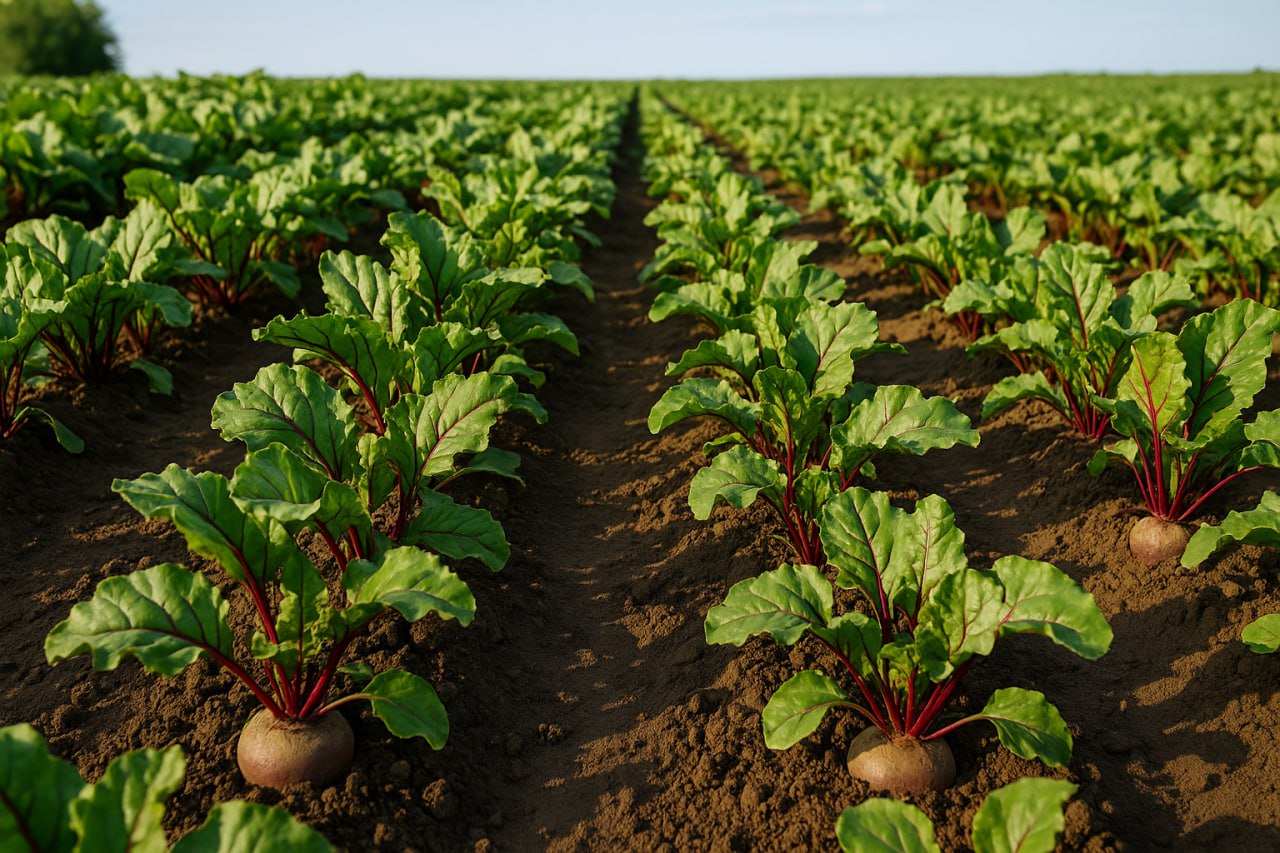
When planting beets, it is necessary to follow the rules of crop rotation. Beets should be rotated in such a way that after 3-4 years they can be replanted in the same place.
Beets develop very slowly in the early growing season, and weeds can germinate before they do and take over the field. Therefore, it is recommended to plant beets after the crops that need to be weeded, such as potatoes, cucumbers, and cabbage.
Beet varieties are now available, and farmers have the opportunity to choose the variety or hybrid that is most suitable in terms of yield and taste.
Beetroot seeds are sown in the following periods:
In the southern regions: December 1–30
In the central regions: November 15 - December 15
In the northern regions: November 1 - December 1
During these periods, it is recommended to plant local Diyor, Single varieties and foreign hybrids Bordeaux 237, Bicoress, Boro F1, Detroit, Pablo F1.
When beets are planted in the ninety-first method:
Seed consumption: 16–18 kg per hectare
Distance between egates: 60–70 cm
Location: 2–3 rows
Plant spacing: 8–10 cm
Sowing depth: 2–3 cm
The field is not irrigated after the beet seed is planted. All the main agrotechnical activities begin in the spring.