
LDITI
#Field_seminar
#Jizzakh
Science in drylands - ensuring food security for the future
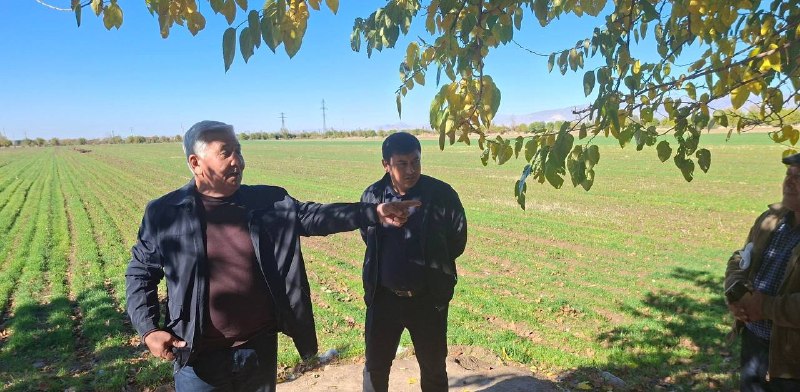
⌛ It is no secret that the increasing soil degradation as a result of climate change is a big problem in agriculture today. Today, every peasant and farmer is well aware that a solution can be found in agriculture using science and innovation. There are more than 750,000 hectares of arable arable land in our country. Of this, 220,000 hectares are located in Jizzakh region. That is, 3/1 part of dry land in the republic is in this region. This means that science is extremely important for regional farmers and peasant farms.
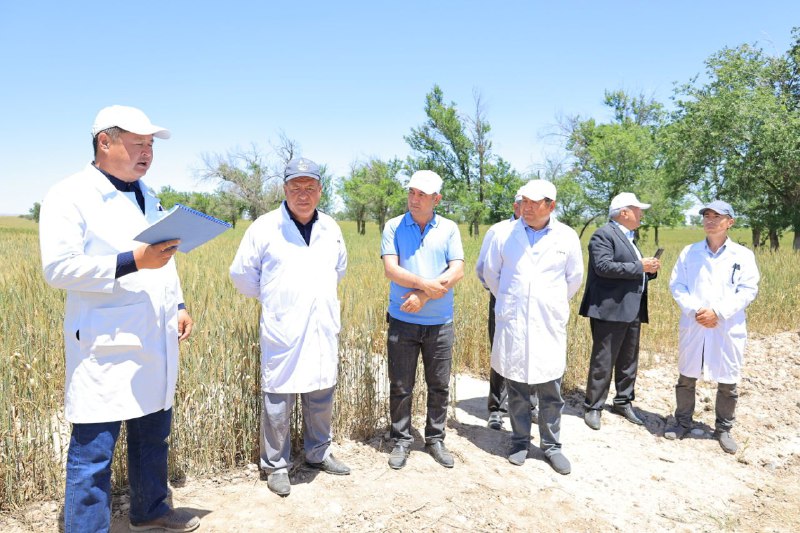
Today, the field-seminar held at the Lalmikor Agricultural Research Institute was devoted to the same issues. Scientific research conducted on the topic "Agrotechnologies of selection, seeding and cultivation of sorghum, oil and leguminous crops in dry regions" was presented to the participants.
In particular, research is being carried out on a total of 2,622 variety samples in soft and hard wheat genetics selection and breeding laboratories, of which 32 new varieties in the soft wheat selection nursery, 38 new rows in the initial variety trial nursery, 90 new rows in the control nursery, 135 rows in the 2nd year selection nursery, 1st year selection 280 lines are studied in the nursery, 86 hybrid lines in the nursery of hybrids, 735 variety samples in the collection nursery.
In addition to crops suitable for dry soil such as peas, mash, sorghum, flax, barley, alfalfa, undow, other oil crops such as sedana and sesame are being experimentally researched at the institute.
Based on the results of the conducted research, a recommendation will be made for farms and agroclusters operating in dry areas.
Subscribe to the official pages of the National Center!
WEB|Telegram| Instagram | Facebook |▶ Youtube