
AGROTECHNOLOGY OF CROP CULTIVATION
As a main crop (in the spring season), a plow is planted in autumn to prepare the field. Chiseling, harrowing and opening of ditches are carried out in the spring.
For repeated (summer season) planting, the land is plowed after the previous crop. Chiseling, harrowing and egate extraction are carried out.
After late harvest of autumn wheat, the field is irrigated to prepare the field for planting mush without plowing, and the mush is removed from the mush with a chisel to plant mush seeds.
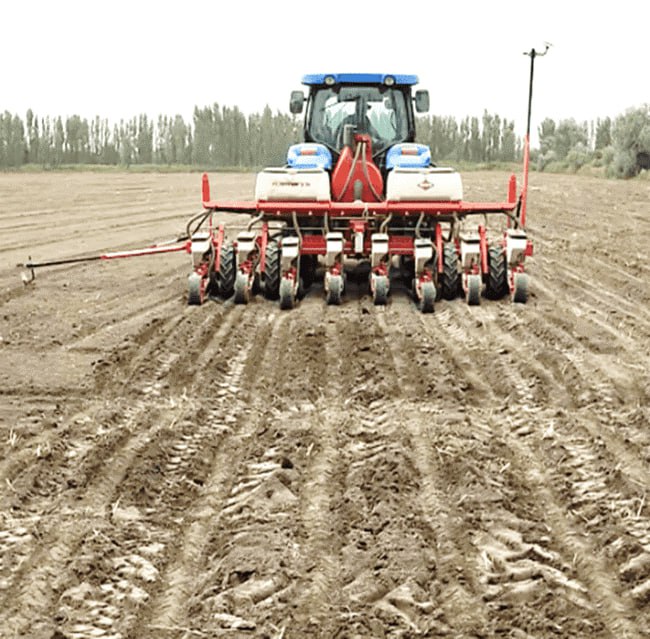
And in organic farming, when using resource-saving technology, rows are opened and mush seeds are planted with the help of machinery without plowing the land. In spring, seeds should be sown on April 10-20, and in summer, from June 15 to July 1. The yield of mush planted after July 5 will be low.
Planting scheme: 70 cm x 15-20 cm. In large areas, mash is sown with the help of seed drills, and in small areas, it is sown by hand. The depth of planting seeds should be 3-5 cm. Average seed consumption - 16.0 kg/ha.
Moss is resistant to drought and does not require a lot of water. However, it is advisable to always keep the soil moisture in the normal range. It is watered 2-3 times during the growing season. It is necessary to water the mash seeds for germination and before flowering. The water requirement of the plant is 1500 m3 in the spring period, and 2000 m3 in the summer period. After the pods appear, it is not recommended to water the plants in order for them to fully mature.
It is important to carry out agrotechnical measures in time to clean the main focus from weeds during the periods of growth and development of mosh. During the growing season, it is necessary to cultivate the rows between rows 1-2 times by hand in small areas, and 1-2 times by machine in larger areas, before applying fertilizers and watering. Nitrogen in mixed fertilizers has a good effect on the growth and development of plants. Especially phosphorus fertilizers should be given before planting, because phosphorus in the soil needs some time to affect the plant.
⌛ Before plowing the field in the fall for mosh planting in the main (spring) season, phosphorus and 20-40 kg of potassium fertilizers are applied at the rate of 40-60 kg of pure substance per hectare. Nitrogen fertilizers are fed in the amount of 20-30 kg before planting and during the growing season. 20-30 kg of phosphorus and 10-20 kg of potassium are added during the period of tillering and flowering. 40-60 kg of phosphorus, 20-40 kg of potassium and 20-30 kg of nitrogenous fertilizers are added per hectare when the land is plowed repeatedly (in the summer season). 20-30 kg of nitrogen, 20-30 kg of phosphorus, and 10-20 kg of potassium are added during the period of tillering and flowering. before planting mash in the summer season without plowing the land, the above-mentioned amount of fertilizer is applied to the ground.
Harvesting of mung beans in small areas was done by hand after ripening in the first ten days of October. Large areas were harvested with the help of combine harvesters, cleaning was carried out separately, grinding, calibration and packaging were carried out in specially equipped equipment.
Our social media pages!
WEB|Telegram| Instagram | Facebook |Youtube