
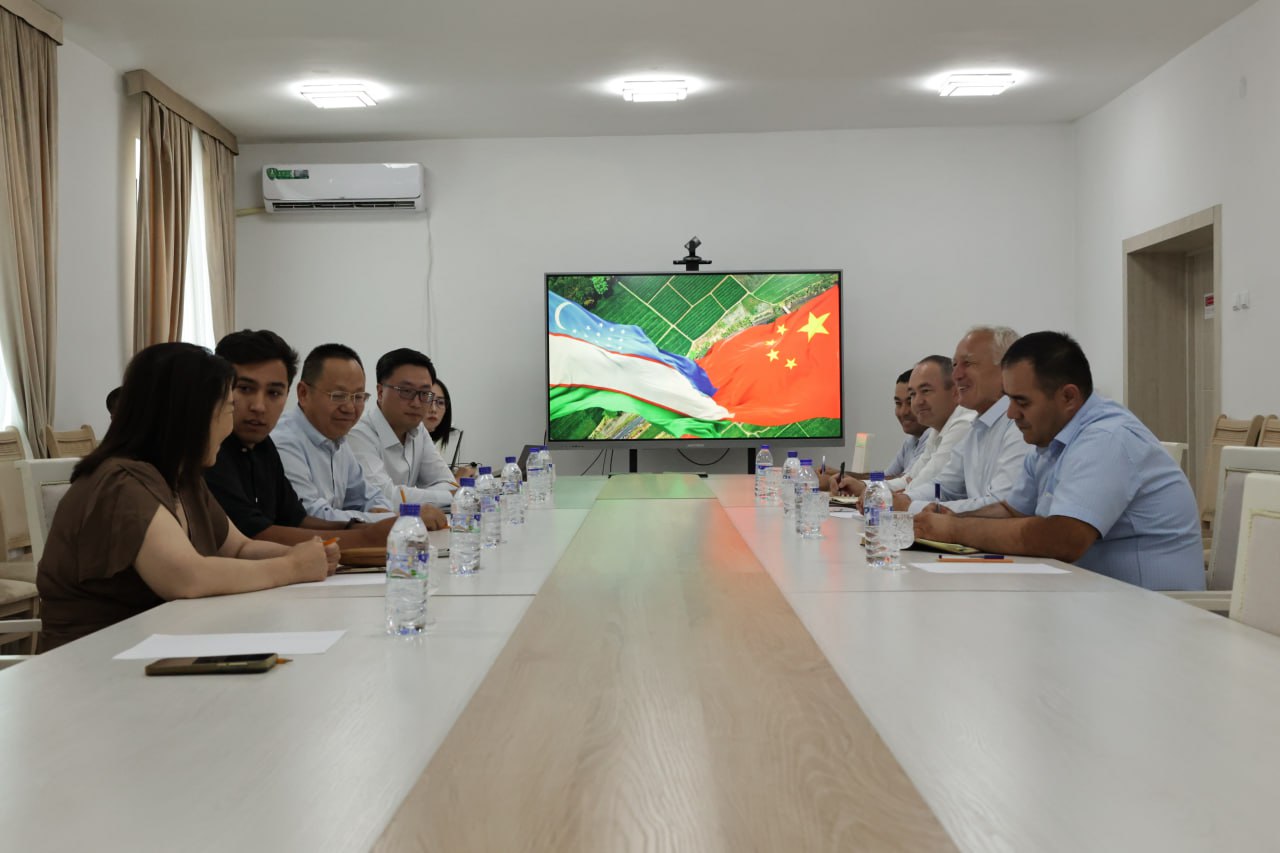
Cooperation between Uzbekistan and China in all fields is getting stronger every year. It is definitely giving its expected result. In particular, mutual cooperation in the development of agriculture is rising to a new level. This is especially evident in cooperation in the field of science. Academician Shodmon Namozov, director of the National Center for Knowledge and Innovation in Agriculture and Xinjiang Jinghua Seeds Co., Ltd. This was also specially recognized in the meeting held between the director of the company, Chengbo Jiang.
During the conversation, which took place in a sincere and trusting spirit, the head of the Center informed the guests about the organization's scientific potential, infrastructural capabilities, and the tasks being carried out. In his turn, Mr. Chengbo Jiang also noted with pleasure that the scientific cooperation carried out on the basis of the preliminary agreement reached during the business trip of the National Center for Knowledge and Innovation in Agriculture and the head of the Scientific-Research Institute of Cotton Selection, Seeding and Cultivation in the system is yielding positive results.
During the dialogue, the parties agreed to further expand cooperation in the field of seed production and selection in agriculture. Also, the National Center for Knowledge and Innovation in Agriculture and "Xinjiang Jinghua Seeds Co., Ltd." a memorandum of understanding was signed between them.
Joint creation of high-yielding, drought- and salt-resistant cotton varieties, demonstration of early and high-density cotton varieties and planting models after wheat, establishment of a joint selection laboratory based on molecular markers, establishment of an off-season selection base in China's Hainan province (Sanya), training of personnel in cotton selection and implementation of technical trainings were defined as the main conditions of the memorandum.
This partnership serves to accelerate the selection in the conditions of climate change, the rapid implementation of resistant cotton varieties suitable for local conditions, and to increase socio-economic efficiency in agriculture.
In addition, through the joint laboratory and the off-season base, the variety selection process will be shortened, the scientific creative potential will increase, and the exchange of modern technologies between the scientists of the two countries will expand.