
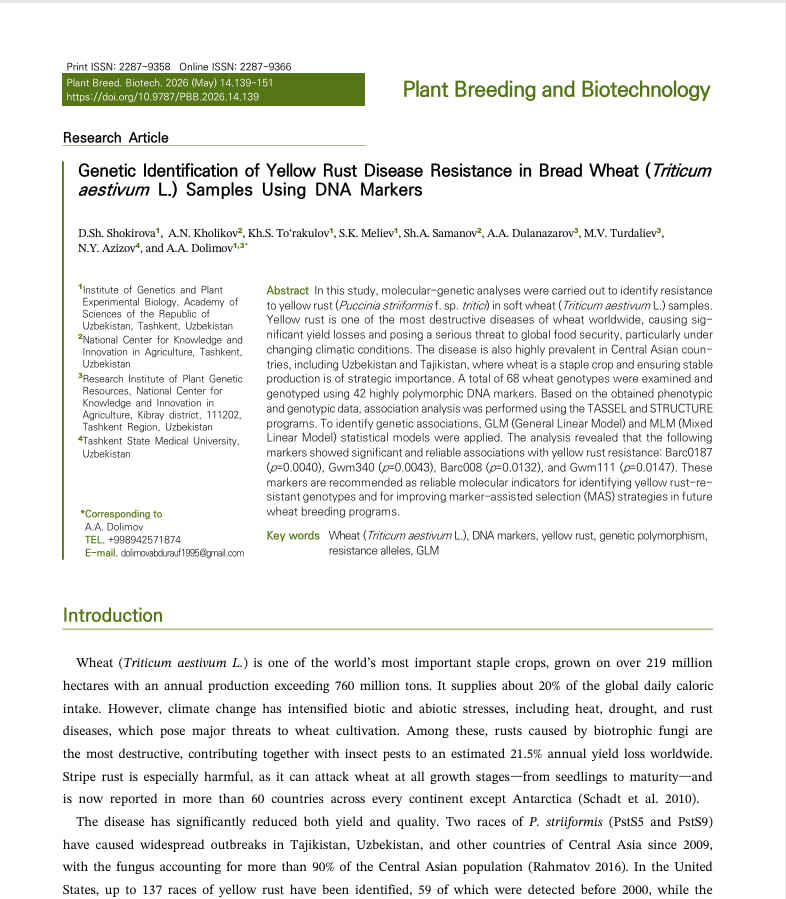
The scientific research of Uzbek scientists dedicated to studying the resistance of wheat to yellow rust disease is prestigious in the field of plant selection and biotechnology. "Plant Breeding and Biotechnology" was published in the international scientific journal. This journal is indexed in the Scopus international scientific database and has a Q2 rank in the fields of biotechnology and plant science. In the article, yellow rust of soft wheat samples (Puccinia striiformis f. sp. wheat) results of molecular-genetic research on determining resistance to the disease based on DNA markers are highlighted.
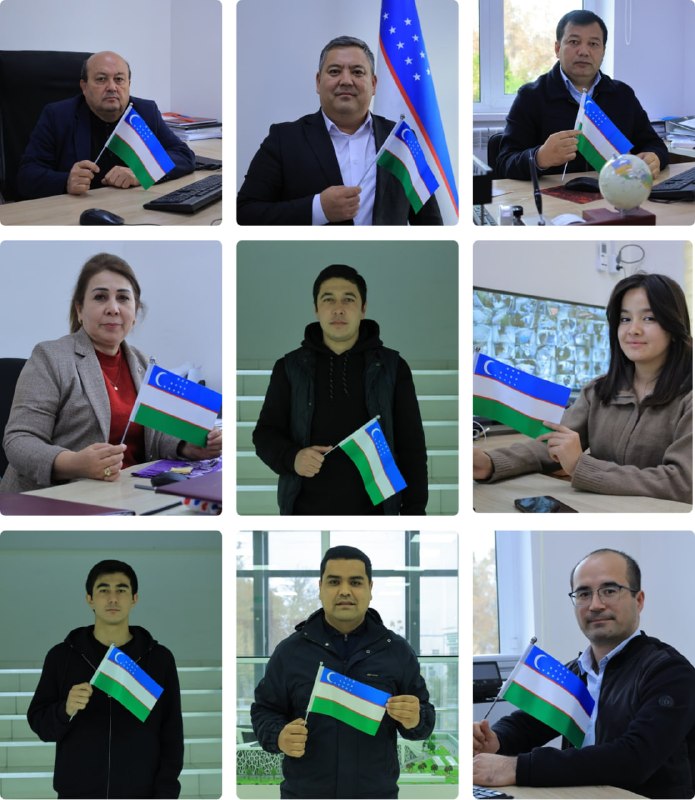
Shermuhammad Samanov, head of the department of the National Center for Knowledge and Innovations in Agriculture, was among the authors of the study. Scientific research was carried out in cooperation with scientists of a number of scientific institutions of Uzbekistan.
During the study, 68 wheat genotypes were analyzed using 42 highly polymorphic DNA markers, and important genetic markers associated with yellow rust resistance were identified. In particular, the markers Barc0187, Gwm340, Barc008 and Gwm111 were noted to have a reliable relationship with disease resistance.
Experts say that the identified markers will be important in the future to create wheat varieties resistant to yellow rust disease, to accelerate selection processes and to ensure food safety. The results of the study provide a solid scientific basis for further improvement of marker-based selection programs.
For information, yellow rust is one of the most dangerous diseases that seriously damage wheat productivity. Research on the development of varieties resistant to this disease plays an important role in strengthening the food security of the region.
The full text of the study can be found at the following link: https://www.kci.go.kr/kciportal/ci/sereArticleSearch/ciSereArtiView.kci?sereArticleSearchBean.artiId=ART003336543