
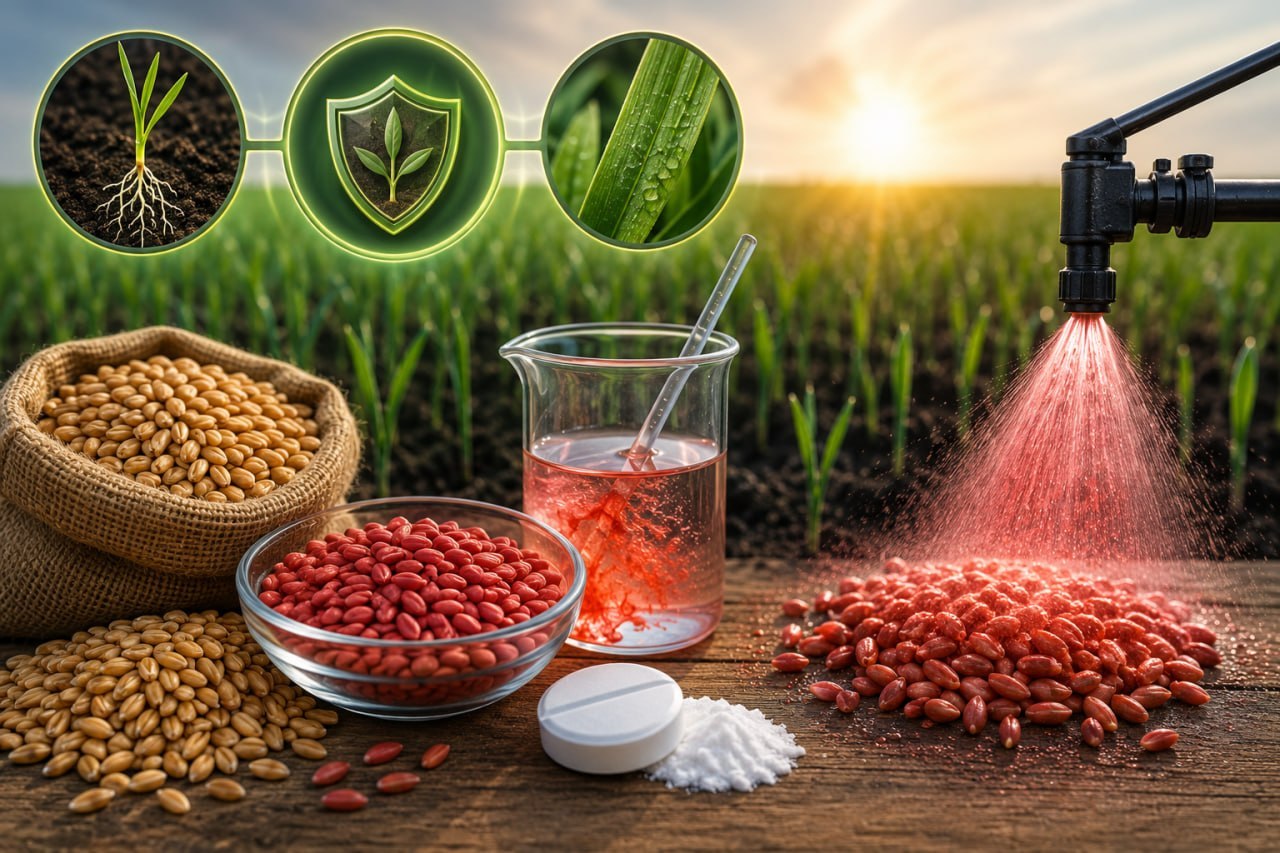
Treatment of seeds with chemical fungicides and insecticides aspirin (acetylsalicylic acid) application is one of the effective agrotechnical methods that serve to obtain a high yield. If chemical preparations protect the seed from external diseases and pests, aspirin activates the plant's natural immunity and helps to increase resistance to stress factors such as drought, cold, salinity. Also, it reduces the phytotoxic stress that can be caused by the effects of chemical preparations, and creates favorable conditions for the faster development of sprouts.
When using aspirin:
the root system develops well;
energy of seed germination increases;
sprouts grow strong and healthy;
resistance to diseases increases;
the activity of antioxidant enzymes increases, tolerance to external stress factors increases;
in the next stages, the spike length, grain number and grain mass may increase.
Method of application:
For 1 ton of seed grain 50 grams of pure acetylsalicylic acid (100 tablets of 500 mg) is recommended. First, it should be completely dissolved in 2-3 liters of warm water with a temperature of +30-35°C, and then added to 10 liters of working fluid. This working fluid is used to treat 1 ton of seeds.
Important rules:
Seeds in a mixture of aspirin and chemical preparation it is impossible to freeze. The working solution should be sprayed only on the surface of the seed. Aspirin concentration in solution 0.005–0.01% and the pH indicator 6–7 it is recommended to keep around. High doses may have adverse effects. Aspirin is an inexpensive and readily available immune stimulant that can help enhance the effectiveness of chemotherapy when used in recommended doses. However, it is necessary to strictly follow the established norms and technology in its application.